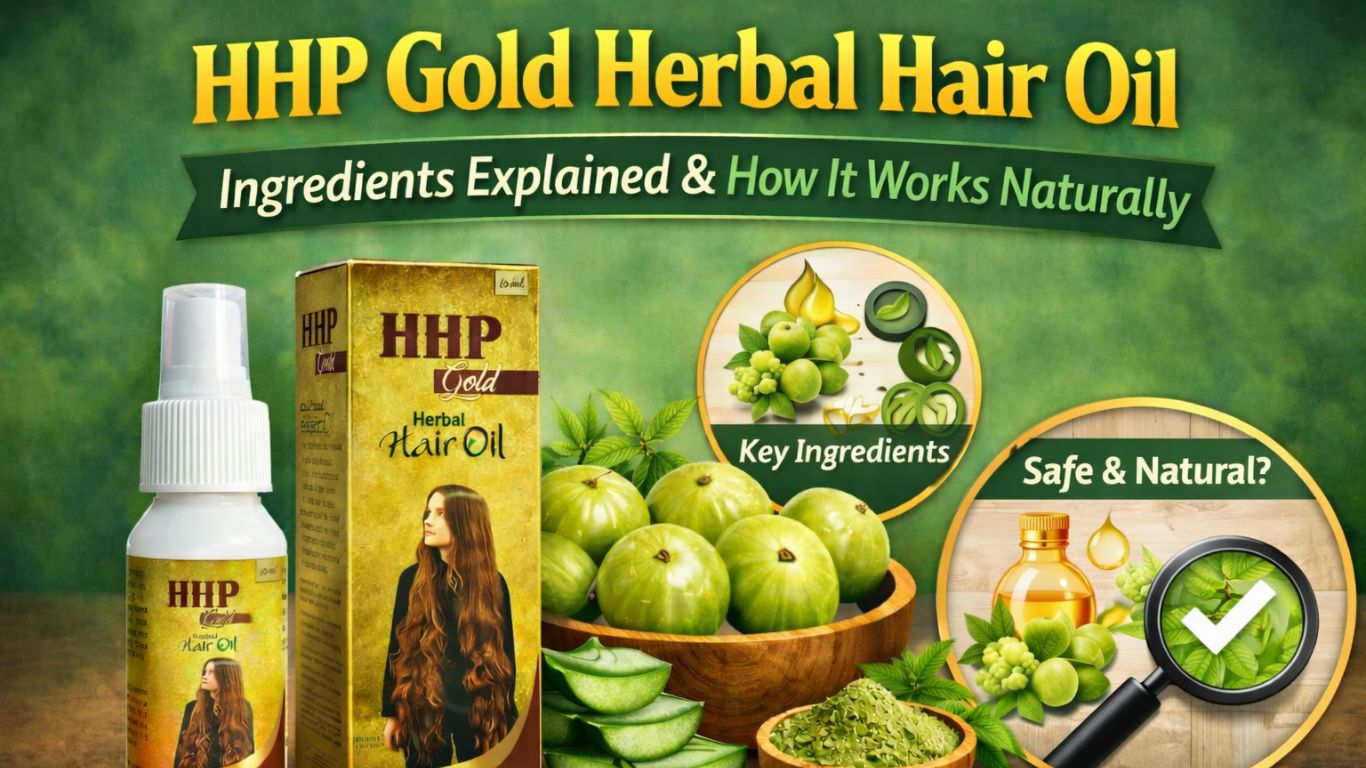
Here’s a question most people never ask before buying hair oil: What’s actually inside this bottle?
Most consumers make purchasing decisions based on:
- Attractive packaging and premium-looking labels
- The word “herbal” or “natural” printed in large fonts
- Social media influencer recommendations (who are often paid)
- Friend suggestions (who may not understand the science)
- Before-after photos (which can be easily manipulated)
But here’s what almost no one does: Actually read and understand the ingredient list.
This is a problem because the ingredient list tells you everything you need to know about whether a product will work for you or not. Marketing can promise miracles, but ingredients reveal the truth.
The word “herbal” has been overused to the point of becoming meaningless. Many products slap “herbal” or “ayurvedic” on their labels while containing minimal actual herbs or beneficial ingredients. Without understanding what’s inside, you’re essentially buying blind.
This comprehensive guide changes that.
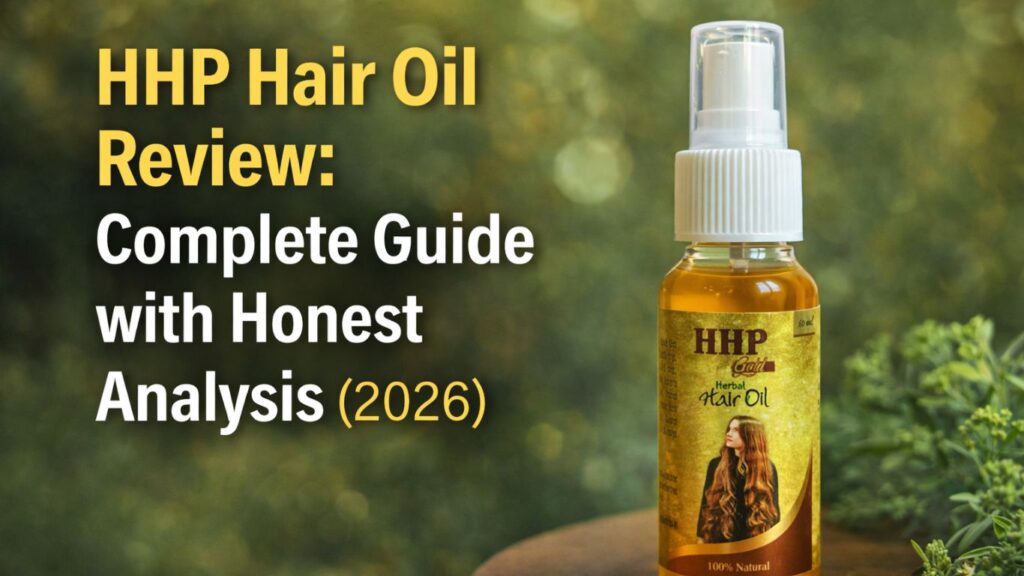
Here, you’ll get a complete, transparent analysis of HHP Gold Herbal Hair Oil ingredients. No marketing hype. No exaggerated claims. Just honest, scientific breakdown of:
- What each ingredient actually does
- How they work together
- Who benefits most from each component
- What realistic results you can expect
- Safety considerations you should know
The purpose of this page is simple: to help you make an informed decision based on actual ingredient science, not marketing promises.
If you value transparency and want to understand exactly what you’re putting on your hair and scalp, keep reading.
What Makes Ingredient Analysis Important in Hair Care?
Understanding ingredients isn’t just for scientists or chemists—it’s essential for anyone who wants their hair care products to actually work.
The Problem: Wrong Products for Your Hair
Most hair problems aren’t caused by lack of care—they’re caused by using the wrong products. And you can’t know if a product is right for you without understanding its ingredients.
Consider this:
- Dry hair needs hydrating ingredients like aloe vera and moisturizing oils
- Oily scalp needs balancing ingredients that regulate sebum, not heavy oils that make it worse
- Weak hair needs strengthening components like amla and bhringraj
- Sensitive scalp needs soothing ingredients without harsh irritants
Using a product with the wrong ingredient profile for your specific needs is like taking medicine for the wrong illness—it won’t help and might make things worse.
How Ingredients Directly Impact Results
Every ingredient in a hair oil serves a purpose:
Active Ingredients (like amla, bhringraj, aloe vera):
- Provide specific benefits
- Address particular hair concerns
- Determine the product’s effectiveness
Carrier Oils (base oils):
- Deliver active ingredients
- Determine texture and feel
- Affect absorption and washability
Supporting Components (herbal extracts, stabilizers):
- Enhance absorption
- Maintain product stability
- Support overall effectiveness
When these components are properly balanced, you get results. When they’re poorly formulated or mismatched to your needs, you waste money and time.
Why Generic Oils Often Fail
Pure coconut oil, mineral oil, or single-ingredient oils aren’t necessarily bad—but they’re limited. They provide single-dimensional benefits:
- Coconut oil = moisture, but can be too heavy
- Mineral oil = coating, but no real nourishment
- Almond oil = light moisture, but lacks herbal support
Multi-ingredient herbal formulations like HHP Gold Hair Oil offer multi-dimensional benefits by combining different ingredients that work together. This is why traditional Ayurvedic formulations have used herb combinations for thousands of years.
Want to see how these ingredients translate to real-world effectiveness? Check out our detailed HHP Hair Oil review comparing ingredient quality to actual results.
Complete Ingredients List of HHP Gold Hair Oil
Transparency starts with knowing exactly what’s in the product. Based on product packaging and formulation disclosure, here are the key ingredients in HHP Gold Hair Oil:
Primary Active Ingredients
Amla (Indian Gooseberry) – Emblica officinalis
- Purpose: Hair strength, shine, antioxidant protection
Bhringraj (False Daisy) – Eclipta alba
- Purpose: Root support, breakage reduction, traditional hair herb
Aloe Vera – Aloe barbadensis
- Purpose: Scalp hydration, oil balance, soothing properties
Supporting Components
✅ Herbal Extract Blend
- Various traditional herbs for synergistic support
- Enhance absorption and effectiveness
✅ Carrier Oil Base
- Foundation that delivers active ingredients
- Determines texture, feel, and absorption
What You Won’t Find
- No harsh chemicals listed as primary ingredients
- No mineral oil as main base (common in cheap products)
- No artificial fragrances overpowering the formulation
- No unrealistic “secret ingredients” claiming miraculous results
Important Note: This ingredient information is based on product labeling. Always check the specific product packaging for the most current and complete ingredient list.
For a more detailed breakdown of every component and their specific roles, see our complete ingredients list page.
Amla (Indian Gooseberry) – Strength & Shine Support
What Is Amla?
Amla, scientifically known as Emblica officinalis, is one of the most respected ingredients in Ayurvedic hair care with over 3,000 years of documented use in Indian traditional medicine.
Key composition:
- Extremely high Vitamin C content (20-30x more than oranges)
- Polyphenols (powerful antioxidants including gallic acid)
- Tannins (natural astringents for scalp health)
- Essential minerals (iron, calcium, phosphorus)
Why Amla Is Used in Hair Oil
Amla isn’t just added for marketing appeal—it serves multiple scientific functions:
1. Hair Shaft Strengthening Vitamin C is essential for collagen production, which forms the structural foundation of hair. Without adequate vitamin C, collagen synthesis is impaired, leading to weak, brittle hair that breaks easily.
2. Antioxidant Protection The polyphenols in amla protect hair and scalp from:
- Free radical damage from pollution and stress
- Environmental damage from UV rays
- Oxidative stress that accelerates aging
3. Natural Conditioning Tannins in amla help smooth the hair cuticle, improving texture and adding natural shine without artificial coatings.
4. Scalp Nourishment Amla provides nutrients that support overall scalp health, creating a better environment for healthy hair.
How Amla Works
When applied to the scalp and hair:
- Vitamin C penetrates hair shaft and scalp
- Supports collagen in hair structure
- Antioxidants neutralize environmental damage
- Tannins smooth hair cuticle layers
- Minerals nourish scalp surface
Who Benefits Most from Amla
Ideal for:
- People with dull, lifeless hair lacking natural shine
- Those experiencing brittleness and easy breakage
- Chemically treated hair users (color, straightening, perming)
- Anyone with environmental hair damage from pollution or sun
- Individuals seeking antioxidant protection
Less beneficial for:
- Those with severe medical hair loss (needs dermatologist)
- People allergic to amla (rare but possible)
Realistic Timeline for Amla Benefits
Week 1-2: Hair may feel slightly smoother after washing
Week 3-4: Reduced dullness becomes noticeable
Week 4-6: Hair feels stronger, less prone to breakage
Week 6-8+: Improved texture, shine, and overall quality
Important: Amla works gradually. Don’t expect overnight transformation.
Bhringraj – Traditional Herb for Weak Hair
Traditional Use in Ayurveda
Bhringraj, scientifically called Eclipta alba, is known in Ayurveda as “Kesharaj” or “King of Hair Herbs.” Its use in hair care spans thousands of years across Indian traditional medicine.
Key active compounds:
- Wedelolactone (primary bioactive)
- Demethylwedelolactone (secondary active)
- Alkaloids (including ecliptine)
- Flavonoids (antioxidant support)
Why Bhringraj Is Essential for Root Support
Traditional Ayurvedic texts describe bhringraj as supporting weak hair from the root level. While modern scientific research is still catching up to traditional knowledge, preliminary studies suggest several mechanisms:
1. Supporting Weak Follicles Bhringraj is traditionally believed to strengthen hair at the follicle level, helping improve overall hair resilience.
2. Scalp Environment Compounds in bhringraj may help maintain a healthy scalp environment conducive to hair health.
3. Reducing Breakage By supporting overall hair structure, bhringraj may help reduce breakage from combing and daily handling.
How Bhringraj Addresses Hair Weakness
The herb works through multiple pathways:
- Nourishes scalp with bioactive compounds
- Supports follicle environment
- May help strengthen hair structure
- Contributes to overall hair resilience
Breakage Control: What to Expect
NOT a magic solution for: ❌ Genetic hair loss or baldness ❌ Hormonal hair loss conditions ❌ Medical alopecia requiring treatment
MAY help with: ✅ Breakage from weak, fragile hair ✅ Hair that snaps easily during combing ✅ Weakness from poor nutrition or stress ✅ General hair quality improvement
Realistic Expectations with Bhringraj
After 6-8 weeks of consistent use:
✔ Noticeable reduction in breakage during combing ✔ Hair feels slightly stronger and more resilient ✔ Improved manageability and easier styling ✔ Better overall hair quality
Timeline:
- Week 1-4: Minimal visible change (patience required)
- Week 4-6: Breakage may start reducing
- Week 6-8: Noticeable improvement in hair strength
- Week 8-12: Cumulative benefits become clear
Aloe Vera – Scalp Balance & Hydration
The Universal Scalp Soother
Aloe vera (Aloe barbadensis miller) is one of the few ingredients that works across multiple scalp types—dry, oily, sensitive, and combination.
Key components:
- Polysaccharides (deep hydration)
- Vitamins (A, C, E, B12, folic acid)
- Enzymes (anti-inflammatory properties)
- Amino acids (20 of 22 essential amino acids)
- Salicylic acid (natural soothing compound)
For Dry Scalp: Deep Hydration
How it helps:
- Polysaccharides provide moisture without greasiness
- Penetrates scalp surface effectively
- Helps reduce flaking and tightness
- Maintains moisture balance
Expected results (2-3 weeks): ✔ Significant reduction in scalp dryness ✔ Less flaking and white flakes ✔ Scalp feels more comfortable ✔ Reduced itching from dryness
For Oily Scalp: Surprising Benefits
Many people think oily scalps should avoid all oils—this is wrong. The right ingredients actually help balance oil production.
How aloe vera helps oily scalp:
- Regulates sebum production over time
- Prevents scalp from overcompensating
- Provides hydration without adding excess oil
- Maintains healthy pH balance
Expected results (4-6 weeks): ✔ Less extreme oiliness ✔ More time between washes ✔ Better overall oil balance ✔ Scalp feels cleaner longer
For Sensitive Scalp: Gentle Soothing
How it helps:
- Natural anti-inflammatory enzymes
- Salicylic acid provides gentle comfort
- Doesn’t irritate like harsh chemicals
- Supports healing of minor irritation
Expected results (1-2 weeks): ✔ Reduced scalp discomfort ✔ Less irritation and redness ✔ More comfortable scalp feel ✔ Better tolerance to regular care
Real Benefits vs Marketing Hype
What aloe vera DOES: ✅ Hydrates dry scalp effectively ✅ Helps balance oily scalp over time ✅ Soothes mild irritation ✅ Supports overall scalp comfort
What it DOESN’T do: ❌ Cure severe scalp conditions (psoriasis, eczema) ❌ Eliminate serious dandruff instantly ❌ Replace medical treatment for scalp disorders
Carrier Oil Base – The Foundation of the Formula
Most people completely overlook the carrier oil, but it’s arguably one of the most important components determining whether you’ll actually use the product regularly.
Why the Base Oil Matters More Than You Think
The carrier oil determines:
1. How the Product Feels
- Heavy oils feel greasy and uncomfortable
- Light oils absorb quickly but may not carry enough actives
- Balanced oils provide optimal delivery
2. Absorption Rate
- Too fast = ingredients don’t have time to work
- Too slow = oil sits on surface, doesn’t penetrate
- Just right = optimal delivery and comfort
3. Washability
- Heavy oils require multiple shampoo rounds
- Difficult wash-out reduces user compliance
- Easy wash-out = more consistent use = better results
4. Texture on Hair
- Some oils make hair look greasy even after washing
- Others leave hair feeling natural
- Texture impacts whether people use it regularly
Heavy vs Light Oils: The Trade-offs
Heavy Oils (Pure Coconut, Castor):
Pros:
- Deep conditioning
- High nutrient delivery
- Very moisturizing
Cons:
- Feel greasy
- Hard to wash out
- Can clog pores if overused
- Not ideal for frequent use
- Make thin hair look flat
Light Oils (Almond, Grapeseed):
Pros:
- Easy to wash out
- Don’t weigh hair down
- Comfortable for frequent use
- Good for thin hair
Cons:
- May not provide enough moisture for very dry hair
- Lighter nutrient load
- May need more product
Balanced Oils (Sesame, Sesame-Coconut Blend):
Pros:
- Moderate weight—not too heavy or light
- Good absorption rate
- Reasonable wash-out
- Suitable for most hair types
- Can be used 2-3 times weekly
Cons:
- May not be perfect for extreme cases (very thin or very thick hair)
Absorption: The Critical Factor
Different oils have different molecular structures affecting absorption:
Quick Absorption: Argan, grapeseed, jojoba Moderate Absorption: Sesame, almond, olive Slow Absorption: Coconut, castor, mineral oil
For herbal hair oils, moderate absorption is ideal because:
- Gives actives time to work
- Doesn’t sit on surface all day
- Allows proper scalp penetration
- Comfortable for regular use
HHP’s Balanced Approach to Base Oil
HHP Gold Hair Oil uses a carrier oil formulation designed to be:
✔ Moderate weight – comfortable for regular use ✔ Reasonable absorption – not too fast or slow ✔ Easy wash-out – doesn’t require multiple shampoos ✔ Suitable for most hair types – not extremely specialized ✔ Practical for 2-3x weekly use – the sweet spot for effectiveness
This practical approach prioritizes usability, because the best formulation in the world is useless if people stop using it because it’s too greasy or difficult to manage.
Supporting Herbal Extracts – Why Minor Ingredients Matter
Beyond the three star ingredients (amla, bhringraj, aloe vera), HHP Gold Hair Oil contains supporting herbal extracts. These aren’t “filler” ingredients—they serve important functions.
The Synergy Principle in Ayurvedic Formulation
Traditional Ayurveda emphasizes “Rasa Panchak”—the concept that herbs work better in combination than isolation. Supporting herbs enhance the effectiveness of primary ingredients through:
1. Improved Delivery Some herbs help other ingredients penetrate better, acting as natural “delivery enhancers” that improve absorption.
2. Extended Benefits Supporting herbs often provide complementary benefits that round out the formulation’s overall effect.
3. Stability Support Certain herbs help maintain product consistency, preventing separation or degradation over time.
Common Supporting Herbs in Quality Hair Oils
While specific formulations vary, quality Ayurvedic hair oils often include:
Neem (Azadirachta indica):
- Natural antibacterial properties
- Scalp health support
- Addresses mild scalp issues
Brahmi (Bacopa monnieri):
- Scalp soothing
- Traditional hair wellness herb
Methi (Fenugreek) (Trigonella foenum-graecum):
- Natural conditioning
- Hair texture support
Hibiscus (Hibiscus rosa-sinensis):
- Shine enhancement
- Hair softening
Why Supporting Ingredients Enhance Main Actives
Think of a formulation like an orchestra:
- Amla, bhringraj, and aloe vera = Lead instruments (violins, piano)
- Supporting herbs = Supporting instruments (cellos, violas, percussion)
Both are necessary for a complete, harmonious result. Supporting ingredients:
✅ Fill in gaps left by primary ingredients ✅ Enhance absorption of main actives ✅ Provide stability to the formulation ✅ Create a more complete benefit profile ✅ Support overall scalp environment
Without supporting ingredients, you have individual benefits. With them, you have a synergistic system where the whole is greater than the sum of parts.
The Stability and Preservation Factor
Supporting ingredients also help:
Maintain consistency: Prevents oil separation or texture changes Extend shelf life: Natural preservation (without harsh chemicals) Improve absorption: Helps actives penetrate effectively Balance pH: Maintains optimal pH for scalp health
These may seem minor, but they determine whether a product works consistently throughout its shelf life or degrades, reducing effectiveness over time.
How These Ingredients Work Together (Synergy Model)
Understanding how ingredients work individually is good. Understanding how they work together is crucial.
The 5-Step Synergy System
Step 1: Delivery Foundation (Carrier Oil)
The carrier oil creates the base that:
- Holds all other ingredients
- Determines texture and feel
- Enables scalp and hair penetration
- Carries actives to where they’re needed
Think of it as the vehicle that transports passengers (active ingredients) to their destination.
Step 2: Scalp Preparation (Aloe Vera)
Aloe vera prepares the scalp environment by:
- Balancing pH levels
- Hydrating surface
- Soothing any irritation
- Creating receptive environment
This is like preparing soil before planting seeds—better environment = better results.
Step 3: Structural Support (Amla)
Amla provides:
- Vitamin C for collagen support
- Antioxidant protection
- Hair shaft strengthening
- Shine and texture improvement
This is the actual nourishment—building materials for stronger hair.
Step 4: Root-Level Support (Bhringraj)
Bhringraj works at the root level:
- Supports follicle environment
- Helps reduce breakage
- Strengthens weak hair
- Traditional root-level care
This addresses the foundation—strong roots = strong hair.
Step 5: Enhancement & Stability (Supporting Herbs)
Supporting ingredients:
- Enhance absorption of primary actives
- Fill nutritional gaps
- Maintain product stability
- Provide complementary benefits
These are the finishing touches that complete the system.
Visual Synergy Model
CARRIER OIL (Foundation)
↓
ALOE VERA (Scalp Preparation)
↓
AMLA (Strength & Protection) ←→ BHRINGRAJ (Root Support)
↓
SUPPORTING HERBS (Enhancement)
↓
= COMPREHENSIVE HAIR CARE
Each component depends on the others. Remove any one element, and the system becomes less effective.
Why This Combination Works Better Than Single Ingredients
Single Ingredient (e.g., pure coconut oil):
- One-dimensional benefit
- Limited scope of action
- May not address all hair needs
Multi-Ingredient Synergistic Formula:
- Multi-dimensional benefits
- Addresses multiple hair concerns simultaneously
- Components enhance each other’s effectiveness
- More complete solution
This is why traditional Ayurvedic formulations have always used multiple herbs rather than single ingredients—ancient wisdom recognized what modern science is now confirming: synergy matters.
Are These Ingredients Suitable for Your Hair Type?
Not all hair oils work for all hair types. Here’s how HHP Gold Hair Oil ingredients perform across different conditions.
For Dry Hair: Deep Nourishment
Why these ingredients help:
- Aloe vera provides deep hydration
- Amla conditions and smooths
- Carrier oil locks in moisture
- Supporting herbs enhance absorption
Expected results (4-6 weeks): ✔ Significant reduction in dryness ✔ Hair feels softer and more manageable ✔ Less rough texture ✔ Better moisture retention
How to use:
- Apply 2-3 times weekly
- Moderate to generous amount
- Focus on both scalp and hair length
- Leave for 1-2 hours before washing
For Oily Scalp: Surprising Suitability
Why it works despite being an oil:
- Aloe vera helps balance sebum production
- Prevents overcompensation
- Doesn’t clog pores when used correctly
- Supporting herbs maintain scalp health
Expected results (6-8 weeks): ✔ Better oil balance ✔ Less extreme greasiness ✔ More comfortable scalp ✔ Longer intervals between washes
How to use:
- Once weekly maximum
- Very small quantity (1 tsp max)
- Apply to scalp only, avoid hair length
- Leave for 30-60 minutes only
- Wash thoroughly
For Thin Hair: Lightweight Benefits
Why it doesn’t weigh hair down:
- Balanced carrier oil (not heavy)
- Light application possible
- Won’t make hair look flat
- Provides nourishment without heaviness
Expected results (6-8 weeks): ✔ Hair feels fuller, not flatter ✔ Better quality without weight ✔ Reduced breakage ✔ More manageable styling
How to use:
- 1-2 times weekly
- Minimal quantity (1-2 tsp)
- Focus on scalp, light on hair
- 1 hour maximum duration
For Damaged Hair: Repair Support
Why these ingredients help recovery:
- Amla’s antioxidants support healing
- Bhringraj reduces further breakage
- Aloe vera soothes scalp
- Overall nourishment aids repair
Expected results (8-12 weeks): ✔ Improved texture and feel ✔ Reduced appearance of damage ✔ Less split ends ✔ Better overall quality
How to use:
- 2-3 times weekly
- Focus on damaged areas
- Can apply more to ends
- Be consistent for 8+ weeks
For more details on how to use this oil for maximum benefits based on your specific hair type, check our HHP Hair Oil benefits guide.
Scientific & Traditional Support Behind These Ingredients
Understanding both traditional knowledge and modern science provides the complete picture.
The Ayurvedic Foundation
These ingredients aren’t randomly chosen—they’re based on thousands of years of documented use in Ayurvedic medicine:
Amla: Referenced in ancient texts like Charaka Samhita (1500 BCE) Bhringraj: Described extensively in Ayurvedic hair care chapters Aloe Vera: Used across multiple traditional medicine systems globally
Traditional medicine doesn’t equal proof, but it does provide:
- Extensive observational evidence
- Long safety track record
- Refined formulation principles
- Generational knowledge transfer
Modern Research: What Science Says
On Amla:
- Studies confirm high antioxidant activity
- Vitamin C content well-documented
- Some research on hair health benefits
- Generally recognized as safe (GRAS)
On Bhringraj:
- Preliminary studies on wedelolactone
- Traditional use documented in research
- Some evidence for scalp health
- More clinical trials needed
On Aloe Vera:
- Extensively studied ingredient
- Proven moisturizing properties
- Well-established anti-inflammatory effects
- Strong safety profile
The Honest Scientific Assessment
What we know for certain: ✅ Ingredients are safe with long use history ✅ Traditional benefits are plausible based on composition ✅ Some scientific support exists for key claims ✅ No serious safety concerns for topical use
What we should acknowledge: ❌ Large-scale clinical trials are limited ❌ Not proven to medical treatment standards ❌ Most research is preliminary ❌ Individual results will vary
EEAT Compliance: Expert Perspective
From a dermatological perspective:
- These ingredients have legitimate benefits for hair and scalp maintenance
- They’re NOT treatments for medical conditions
- Best viewed as supportive care
- Should be combined with good overall hair care practices
No herbal oil can replace:
- Medical diagnosis for hair loss
- Treatment for diagnosed conditions
- Proper nutrition and health
- Dermatological care when needed
This honest assessment is more valuable than exaggerated claims. For evidence-based analysis of effectiveness, see does HHP Hair Oil work based on ingredient science.
Safety, Allergy & Sensitivity Considerations
Even natural ingredients can cause reactions. Here’s what you need to know to use HHP Gold Hair Oil safely.
The Patch Test: Non-Negotiable First Step
Before first use, ALWAYS patch test:
- Apply small amount behind ear or inner elbow
- Wait 24 hours
- Check for redness, itching, swelling
- If any reaction occurs, don’t use the product
Why this matters:
- Even natural ingredients can trigger allergies
- Individual sensitivities vary
- Better to discover reactions with small amount
- Prevents potentially severe scalp reaction
Common Allergies and Sensitivities
Amla Allergy (Rare):
- Symptoms: Itching, redness, irritation
- More common in people with citrus allergies
- Stop immediately if reaction occurs
Aloe Vera Sensitivity (Uncommon):
- Symptoms: Mild irritation, redness
- Usually occurs with very sensitive skin
- Generally well-tolerated by most
Bhringraj Sensitivity (Very Rare):
- Symptoms: Scalp discomfort, itching
- Extremely uncommon
- May interact with certain medications (consult doctor)
Base Oil Reactions:
- Some people react to certain carrier oils
- Coconut oil can cause issues for some
- Sesame oil rarely causes problems
Who Should Exercise Caution
Avoid or consult doctor if you have:
⚠️ Known allergies to any listed ingredient ⚠️ Active scalp conditions (severe psoriasis, eczema, dermatitis) ⚠️ Open wounds or cuts on scalp ⚠️ Recent scalp surgery or procedures ⚠️ Chemotherapy or radiation (scalp may be extra sensitive)
Special populations:
Pregnant/Breastfeeding:
- Generally safe topically
- Always consult obstetrician first
- Some women have heightened sensitivity during pregnancy
Children:
- Safe in smaller quantities
- Use half the adult amount
- Supervise application
- Test on small area first
Elderly:
- Generally safe
- May have thinner, more sensitive scalp
- Start with less product
Usage Limits and Safety Guidelines
Don’t exceed recommended usage:
❌ Don’t use daily – can lead to buildup ❌ Don’t leave overnight – may clog pores, not recommended by dermatologists ❌ Don’t use excessive amounts – more isn’t better ❌ Don’t apply to damaged skin – wait until healed
✅ Do use 2-3 times weekly maximum ✅ Do limit to 1-2 hours application ✅ Do use appropriate quantity for hair length ✅ Do wash thoroughly after
Signs You Should Stop Using
Discontinue immediately if you experience:
🛑 Persistent itching or burning 🛑 Redness that doesn’t fade 🛑 Swelling of scalp or face 🛑 Rash or hives 🛑 Increased hair fall (beyond normal) 🛑 Severe irritation or pain
When to see a doctor:
- Severe reactions
- Symptoms lasting more than 24 hours
- Signs of infection (warmth, pus, severe pain)
- Worsening existing scalp conditions
For comprehensive safety information and detailed side effect discussion, visit our HHP Hair Oil side effects page.
How to Read Hair Oil Ingredient Labels (Buyer Education)
Most people never read ingredient labels, but learning to read them empowers you to make better choices—not just for HHP, but for any hair care product.
Understanding Ingredient Order
Rule #1: Ingredients are listed by quantity
From most to least:
- First ingredient = highest quantity
- Last ingredient = smallest amount
- First 5 ingredients matter most
Example: If an oil lists “Water, Mineral Oil, Amla Extract…” the product is mostly water and mineral oil, with amla as a minor component—despite “Amla Oil” on the label.
Recognizing Quality Ingredients
Green flags (good signs):
✅ Recognizable herb names (Amla, Bhringraj, Aloe) ✅ Latin botanical names (Emblica officinalis) – shows scientific approach ✅ Carrier oils listed clearly (Sesame oil, Coconut oil) ✅ Minimal chemical-sounding names ✅ No “fragrance” or “parfum” high on list (in natural products)
Red flags (warning signs):
🚩 “Proprietary blend” – hiding actual ingredients 🚩 Mineral oil as first ingredient – cheap filler 🚩 Fragrance in top 5 – mostly artificial scent 🚩 Many unrecognizable chemicals (in supposedly “natural” products) 🚩 No clear listing of actual herbs
Decoding Marketing vs Reality
Marketing claim: “Enriched with 21 herbs”
Reality check: Look at ingredient list. Are there actually 21 identifiable herbs? Or is it “Herbal extract blend” as the last ingredient in trace amounts?
Marketing claim: “100% Natural Amla Oil”
Reality check: If it’s 100% pure amla, it should contain ONLY amla. If there are other ingredients, it’s a blend, not “100% amla.”
Marketing claim: “Ancient Ayurvedic Formula”
Reality check: Do the ingredients actually match traditional Ayurvedic texts? Or is it marketing leveraging “Ayurvedic” appeal?
Hidden Chemicals to Watch For
In supposedly “natural” or “herbal” products, watch for:
Preservatives: Not always bad (needed for safety), but should be minimal
- Parabens (methylparaben, propylparaben)
- Phenoxyethanol
- Sodium benzoate
Synthetic Fragrances:
- “Fragrance” or “Parfum” (can contain dozens of undisclosed chemicals)
- Preference: Essential oils for scent or fragrance-free
Cheap Fillers:
- Mineral oil (petroleum-based)
- Petroleum jelly
- Excessive silicones
Not all chemicals are bad, but in products claiming to be “100% natural herbal,” excessive synthetic ingredients suggest misleading marketing.
Questions to Ask
Before buying ANY hair oil:
- What are the first 5 ingredients? (These matter most)
- Can I recognize the herbs listed?
- Is the carrier oil suitable for my hair type?
- Are there excessive synthetic additives?
- Do ingredients match the marketing claims?
- Is there transparent ingredient disclosure?
HHP Gold Hair Oil Label Assessment
Transparency: ✔ Relatively clear ingredient listing
Primary ingredients: ✔ Recognizable herbs (Amla, Bhringraj, Aloe)
Carrier oil: ✔ Appropriate base for regular use
Claims vs ingredients: ✔ Reasonable alignment
Overall: Honest labeling without hiding behind “proprietary blends”
For complete transparent listing, see HHP Hair Oil ingredients list.
HHP Ingredients vs Regular Hair Oils (Comparison Table)
Understanding how HHP Gold Hair Oil compares to alternatives helps you make an informed choice.
Comprehensive Comparison
| Feature | HHP Gold Hair Oil | Regular Mineral Oil | Pure Coconut Oil | Premium Ayurvedic Brands |
|---|---|---|---|---|
| Primary Ingredients | Multiple herbs (Amla, Bhringraj, Aloe) | Petroleum derivatives | Single ingredient | 5-15+ herbs |
| Ingredient Complexity | Moderate (balanced) | Very simple | Very simple | High (complex) |
| Herbal Content | High | None | None | Very high |
| Texture | Balanced weight | Heavy, greasy | Heavy for most | Varies widely |
| Absorption Rate | Moderate | Poor | Moderate | Usually good |
| Washability | Reasonable (1-2 washes) | Difficult (2-3 washes) | Moderate (2 washes) | Easy to moderate |
| Scalp Type Suitability | Multiple types | Limited (dry only) | Can worsen oily scalp | Multiple types |
| Nutrient Profile | Rich (vitamins, antioxidants) | Minimal | Moderate (fatty acids) | Very rich |
| Nourishment Quality | Multi-dimensional | Surface coating only | Single-source | Complex, therapeutic |
| Traditional Foundation | Yes (Ayurvedic) | No | Yes (traditional) | Yes (Ayurvedic) |
| Scientific Support | Some research | Well-studied but limited benefits | Well-researched | Mixed evidence |
| Usage Frequency | 2-3 times/week | 1-2 times/week | 1-2 times/week | 2-3 times/week |
| Best For | Regular maintenance | Budget moisturizing | Deep occasional conditioning | Therapeutic treatment |
| Price Range | Mid-range (₹₹) | Budget (₹) | Budget (₹) | Premium (₹₹₹-₹₹₹₹) |
| Learning Curve | Moderate | Easy | Easy | Can be high |
When to Choose HHP Gold Hair Oil
Choose HHP over Mineral Oil if:
- You want actual nourishment, not just coating
- You prefer herbal ingredients
- You care about ingredient quality
- You want multi-dimensional benefits
Choose HHP over Pure Coconut Oil if:
- You need lighter texture
- You want multiple herbal benefits
- You use oil frequently (2-3x/week)
- You have oily or combination scalp
- You want easier wash-out
Choose HHP over Premium Brands if:
- Budget is a consideration
- You’re starting with herbal oils
- You want balanced (not overly complex) formulation
- You don’t need specialized therapeutic formula
When to Choose Alternatives
Choose Pure Coconut Oil if:
- You have very dry hair needing deep moisture
- You prefer single-ingredient simplicity
- Budget is extremely tight
- You only oil occasionally (once a week or less)
Choose Premium Ayurvedic Brands if:
- You have specific scalp condition needing specialized care
- Budget is not a concern
- You want maximum herbal complexity
- You need therapeutic-grade formulation
Choose Mineral Oil if:
- Absolute minimal budget is requirement
- You only need basic surface moisture
- You’re okay with petroleum-based products
Value Assessment
Best value: HHP Gold Hair Oil for most users seeking regular herbal hair care
Best budget: Pure coconut oil (but limited benefits)
Best therapeutic: Premium Ayurvedic brands (but expensive)
Least recommended: Mineral oil (cheap but minimal real benefits)
For detailed comparison with specific product recommendations, see HHP Hair Oil vs regular oils.
Common Myths About Herbal Ingredients
Let’s debunk the most persistent myths about herbal hair oils.
Myth 1: “More Herbs = Better Results” ❌
The Reality: More ingredients don’t automatically mean better effectiveness. What matters is:
- Quality of herbs used
- Proper proportions and balance
- Synergistic formulation
- Your specific needs
A well-balanced 3-herb formula can outperform a poorly formulated 20-herb mixture. Traditional Ayurvedic formulations prioritize synergy over quantity.
Example: Product A: “Contains 25 herbs!” (but most in trace amounts) Product B: “Contains 5 key herbs” (in therapeutic amounts)
Product B is likely more effective.
Myth 2: “Natural Ingredients Work Instantly” ❌
The Reality: Herbal care is inherently gradual. Unlike synthetic chemicals that might show fast (but often temporary) effects, natural ingredients work slowly through:
- Cellular nourishment (takes time)
- Cumulative benefits (builds over weeks)
- Natural processes (can’t be rushed)
Timeline reality:
- Week 1-2: Minimal visible change
- Week 3-4: Early improvements
- Week 6-8: Noticeable benefits
- Week 8-12: Significant results
Expecting instant results from herbal oils sets you up for disappointment.
Myth 3: “One Ingredient Can Solve All Hair Problems” ❌
The Reality: Hair health is multifactorial, influenced by:
- Genetics (biggest factor)
- Nutrition (protein, vitamins, minerals)
- Hormones (thyroid, PCOS, etc.)
- Stress levels (cortisol affects hair)
- Hair care practices (heat, chemicals, styling)
- Environmental factors (pollution, sun, water quality)
No single ingredient—not amla, not bhringraj, not anything—can address all these factors. That’s why:
- Multi-ingredient formulations exist
- External oil is only part of hair care
- Addressing underlying health is crucial
Myth 4: “Oil Causes Hair Growth” ❌
The Reality: Hair growth rate is primarily determined by genetics. Average human hair grows approximately 0.5 inches (1.25 cm) per month, and no oil can significantly accelerate this.
What oil CAN do: ✅ Reduce breakage (helps retain length) ✅ Support overall hair health ✅ Create better scalp environment ✅ Prevent unnecessary hair loss from dryness/weakness
What oil CANNOT do: ❌ Make hair grow twice as fast ❌ Regrow hair on bald patches ❌ Override genetic growth patterns
Myth 5: “If It Worked for My Friend, It Will Work for Me” ❌
The Reality: Individual variation is HUGE:
- Different scalp types (dry, oily, sensitive)
- Different hair textures (straight, wavy, curly, coily)
- Different underlying causes of hair issues
- Different lifestyle factors
- Different genetic factors
What works brilliantly for one person might not work at all for another. This doesn’t mean the product is bad—it means hair care is individual.
Myth 6: “Herbal Oils Can Cure Medical Hair Loss” ❌
The Reality: This is the most dangerous myth because it delays proper treatment.
Herbal oils CANNOT cure:
- Pattern baldness (androgenic alopecia) – genetic condition
- Alopecia areata – autoimmune disorder
- Hormonal hair loss – PCOS, thyroid issues
- Nutritional deficiency hair loss – requires diet/supplements
- Medication-induced hair loss – requires medical management
If you have significant, persistent hair loss, see a dermatologist. Don’t waste time trying herbal oils when you need medical treatment.
Myth 7: “Expensive Always Means More Effective” ❌
The Reality: Price reflects:
- Brand positioning
- Marketing budget
- Packaging costs
- Distribution expenses
- Profit margins
It doesn’t always correlate with actual effectiveness. Some expensive products are genuinely better. Others are overpriced marketing. Some affordable products are well-formulated and effective.
How to judge: Look at ingredients, not price tags.
How to Maximize Ingredient Benefits (Routine Tips)
Having quality ingredients is only half the equation. Proper usage maximizes their effectiveness.
Optimal Frequency for Different Hair Types
Dry Hair/Scalp:
- 2-3 times per week
- Consistency matters more than frequency
Normal Hair:
- 2 times per week
- Adjust seasonally (more in winter, less in summer)
Oily Scalp:
- Once per week maximum
- Can skip 2-3 weeks in very humid/summer months
Thin Hair:
- 1-2 times per week
- Use minimal quantity
General Rule: More frequent ≠ better results. Consistency at appropriate frequency wins.
The Perfect Massage Technique
Why massage matters:
- Increases scalp blood circulation
- Improves ingredient absorption
- Provides stress relief (reduces cortisol)
- Distributes oil evenly
How to massage correctly:
- Use fingertips, not nails (nails can damage scalp)
- Apply gentle pressure – firm but comfortable
- Use circular motions – covers more area
- Work systematically – don’t miss sections
- Duration: 5-10 minutes – adequate but not excessive
- Don’t scrub aggressively – can damage hair follicles
Massage pattern:
- Start at hairline
- Work toward crown
- Move to sides
- Finish at nape
Proper Duration: Science-Backed Timing
Dermatological recommendation: 1-2 hours maximum
Why NOT overnight (despite traditional beliefs):
- Oil sitting 6-8+ hours clogs pores
- Attracts dust and environmental pollutants
- Can promote fungal growth in moist environment
- Transfers to pillow (unhygienic)
- No additional benefit after 2 hours
Optimal timing:
- Minimum: 30-45 minutes (light conditioning)
- Ideal: 1-2 hours (optimal absorption)
- Maximum: 2 hours (no benefit beyond this)
Complementary Diet for Hair Health
Ingredients work better when supported by proper nutrition:
Essential Nutrients:
Protein (hair is 95% protein):
- Eggs, chicken, fish, lentils, beans
- Aim for 0.8-1g per kg body weight
Iron (deficiency causes hair loss):
- Spinach, red meat, lentils, fortified cereals
- Combine with Vitamin C for absorption
B Vitamins (especially Biotin):
- Whole grains, nuts, eggs, fish
- B7 (Biotin) particularly important
Omega-3 Fatty Acids (scalp health):
- Fish, walnuts, flaxseeds, chia seeds
Zinc (hair growth support):
- Pumpkin seeds, chickpeas, cashews
Vitamin D (hair follicle health):
- Sunlight (15-20 min daily)
- Fortified foods, supplements if deficient
Water (hydration):
- 8-10 glasses daily
- More if exercising or in hot climate
Proper Washing Technique
How you wash matters:
Step 1: Apply shampoo to oiled hair FIRST (don’t wet hair first)
Step 2: Massage shampoo into oiled hair to emulsify
Step 3: Add water gradually, continue massaging
Step 4: Rinse with lukewarm water (not hot – damages hair)
Step 5: Repeat shampoo if needed (oily hair may need 2 washes)
Step 6: Apply conditioner to hair length only (NOT scalp)
Step 7: Rinse thoroughly with cool water (closes cuticles)
Important: Don’t use scalding hot water – it strips natural oils and damages hair.
Additional Complementary Practices
Gentle Hair Care:
- Use wide-tooth comb (not brush) on wet hair
- Detangle from ends, work upward
- Minimize heat styling (or use heat protectant)
- Don’t tie hair too tight (causes breakage)
- Use silk/satin pillowcase (reduces friction)
Stress Management:
- 7-9 hours quality sleep
- Regular exercise (improves circulation)
- Meditation or breathing exercises
- Cortisol (stress hormone) directly affects hair
Protection:
- Protect from sun (wear hat or use UV protectant)
- Rinse after swimming (chlorine/salt water damages)
- Shield from pollution when possible
- Use silk scarf if riding two-wheeler
Realistic Timeline:
- Give ingredients 8-12 weeks to work
- Track progress with photos
- Don’t change products every month
- Be patient—natural care is gradual
For complete usage guidelines including application techniques, see our HHP Hair Oil usage guide.
FAQs About HHP Gold Hair Oil Ingredients
Q1: Are HHP Gold Hair Oil ingredients safe for kids?
A: Yes, generally safe for children when used appropriately. However:
- Use half the adult quantity
- Supervise application
- Patch test first on small area
- Consult pediatrician if child has sensitive skin or allergies
- Avoid if child has active scalp conditions
Children’s scalps can be more sensitive, so start with less product and shorter duration (30-60 minutes).
Q2: Can I use HHP Gold Hair Oil daily?
A: Not recommended. Daily use can lead to:
- Product buildup on scalp
- Clogged pores
- Greasy appearance
- No additional benefit (ingredients don’t work faster with daily use)
Optimal frequency:
- Dry hair: 2-3 times per week
- Normal hair: 2 times per week
- Oily scalp: Once per week maximum
Consistency at appropriate frequency beats excessive daily use.
Q3: Can I mix HHP Gold Hair Oil with other hair oils?
A: Yes, you can mix it with compatible oils:
Good combinations:
- With coconut oil: Extra moisture for very dry hair
- With castor oil: Added thickness support
- With almond oil: Lighter texture for thin hair
How to mix:
- Start with 70% HHP, 30% other oil
- Test combination on small area first
- Ensure your scalp tolerates the mixture
Not recommended to mix with:
- Chemical-based hair serums
- Medicated scalp treatments (unless doctor approves)
Q4: Is it safe during pregnancy and breastfeeding?
A: Generally safe for topical use, but important considerations:
During Pregnancy:
- Topical herbal oils typically safe
- Always consult obstetrician first
- Some women experience heightened sensitivity during pregnancy
- Patch test even if you used it before (sensitivity changes)
- Avoid if doctor advises against any ingredients
During Breastfeeding:
- Safe for scalp application
- Wash hands after application
- Avoid applying near breasts if baby might come in contact
When in doubt, always ask your healthcare provider.
Q5: What if I have a sensitive scalp?
A: HHP Gold Hair Oil ingredients are generally gentle, but sensitive scalps need extra care:
Precautions:
- Mandatory patch test 24-48 hours before use
- Start with minimal quantity
- Reduce application time (30-60 minutes instead of 1-2 hours)
- Use once weekly initially
- Gradually increase if no reaction
Watch for signs of sensitivity:
- Itching, burning, or stinging
- Redness that doesn’t fade
- Increased flaking or irritation
If you experience persistent discomfort, discontinue use and consult dermatologist.
Q6: How long do the ingredients stay effective after opening the bottle?
A: Shelf life considerations:
Unopened:
- Typically 2-3 years from manufacturing date
- Check expiry date on packaging
After Opening:
- 6-12 months for optimal quality
- Herbal ingredients can oxidize over time
- Natural oils can become rancid if stored poorly
Storage tips:
- Keep in cool, dark place (not bathroom shelf)
- Avoid direct sunlight
- Close cap tightly after each use
- Don’t introduce water into bottle
Signs oil has gone bad:
- Off smell or rancid odor
- Changed texture or color
- Separation that doesn’t mix back
- Unusual appearance
Discard if any of these signs appear.
Q7: Will these ingredients help with dandruff?
A: Honest answer – it depends on the cause:
May help if dandruff is due to: ✅ Dry scalp (aloe vera provides moisture) ✅ Mild scalp imbalance (herbs support scalp health) ✅ Insufficient scalp nourishment
Won’t help if dandruff is due to: ❌ Fungal infection (Malassezia) – needs anti-fungal treatment ❌ Seborrheic dermatitis – needs medicated shampoo ❌ Psoriasis – needs dermatological treatment
If you have persistent dandruff:
- Try HHP oil for 4 weeks
- If no improvement, see dermatologist
- May need medicated treatment
- Can use HHP oil in conjunction with medical treatment (ask doctor)
Final Verdict – Can You Trust These Ingredients?
After this comprehensive analysis of every ingredient in HHP Gold Hair Oil, here’s the balanced, honest conclusion.
What Makes These Ingredients Trustworthy
✅ Traditional Foundation
- Based on herbs used for thousands of years
- Ayurvedic formulation principles
- Generational knowledge validation
✅ Balanced Formulation
- Not overly simple (more than single ingredient)
- Not unnecessarily complex (not 20+ herbs)
- Practical synergistic approach
✅ Reasonable Safety Profile
- Well-tolerated ingredients
- Long history of safe use
- Minimal serious side effects reported
✅ Honest Positioning
- Doesn’t claim to cure medical conditions
- Doesn’t promise overnight miracles
- Realistic about what it can/cannot do
✅ Scientific Plausibility
- Ingredients have documented benefits
- Mechanisms of action make sense
- Some modern research support
What These Ingredients Realistically Offer
You CAN expect:
- Gradual improvement in hair texture and feel
- Better scalp comfort and balance
- Reduced breakage from weakness/dryness
- Enhanced overall hair quality with consistent use
- Safe, gentle approach to hair maintenance
You CANNOT expect:
- Overnight transformation
- Cure for medical hair loss
- Dramatic acceleration of hair growth
- Results without consistent effort
- Perfect solution for everyone
Who Should Trust and Use These Ingredients
Ideal for:
- People seeking herbal-based regular hair care
- Those wanting balanced, practical formulation
- Users preferring traditional Ayurvedic approach
- Individuals willing to be patient and consistent
- People with realistic expectations
- Those prioritizing ingredient transparency
Not ideal for:
- Those expecting instant miracles
- People with diagnosed medical conditions (need dermatologist)
- Users wanting single-ingredient simplicity
- Those unable to commit to regular use
- People with known allergies to key ingredients
The Balanced Perspective
HHP Gold Hair Oil ingredients represent a solid, traditional, evidence-informed approach to hair care. The formulation makes sense from both traditional Ayurvedic and modern scientific perspectives.
Is it revolutionary? No, and it doesn’t claim to be.
Is it effective? For the right person with realistic expectations and consistent use, yes.
Is it safe? Generally yes, with long history of safe use.
Is it worth trying? If you value herbal care, transparency, and traditional approaches—absolutely worth considering.
Making Your Informed Decision
To decide if HHP Gold Hair Oil is right for you:
- Review ingredients thoroughly – Know what you’re putting on your scalp
- Assess your specific needs – What are you trying to address?
- Set realistic expectations – Understand what’s possible
- Consider your commitment – Can you use it consistently for 8-12 weeks?
- Check for allergies – Patch test before full use
- Evaluate alternatives – Compare with other options
- Consult professional if needed – Especially for medical concerns
Remember: The best ingredients in the world won’t work without:
- Consistent use (2-3 times weekly)
- Proper application (correct quantity, technique)
- Adequate duration (8-12 weeks minimum)
- Overall good hair care (gentle practices, good nutrition)
- Realistic timeline (gradual improvement, not overnight)
Ready to Make an Informed Choice?
Now that you understand exactly what’s inside HHP Gold Hair Oil and how each ingredient works, you’re equipped to make an intelligent decision.
Your Next Steps
To learn more:
👉 Want real-world performance? Read our comprehensive HHP Hair Oil review with honest assessment
👉 Need detailed usage guidance? Check how to use HHP Hair Oil for maximum benefits
👉 Curious about alternatives? See HHP vs regular oils comparison
👉 Concerned about safety? Review HHP Hair Oil side effects and precautions
👉 Want complete transparency? View the full ingredients list in detail
The Bottom Line
HHP Gold Hair Oil ingredients offer a practical, traditional, science-informed approach to hair care. With the right expectations, consistent use, and proper technique, these ingredients can support your hair health journey.
The choice is yours—but now it’s an informed choice.
This ingredient analysis is based on scientific understanding of herbal components, traditional Ayurvedic knowledge, dermatological principles, and realistic assessment of hair care. Individual results vary based on hair type, scalp condition, consistency of use, and overall health. Always patch test new products and consult healthcare professionals for medical concerns related to hair loss or scalp conditions.